



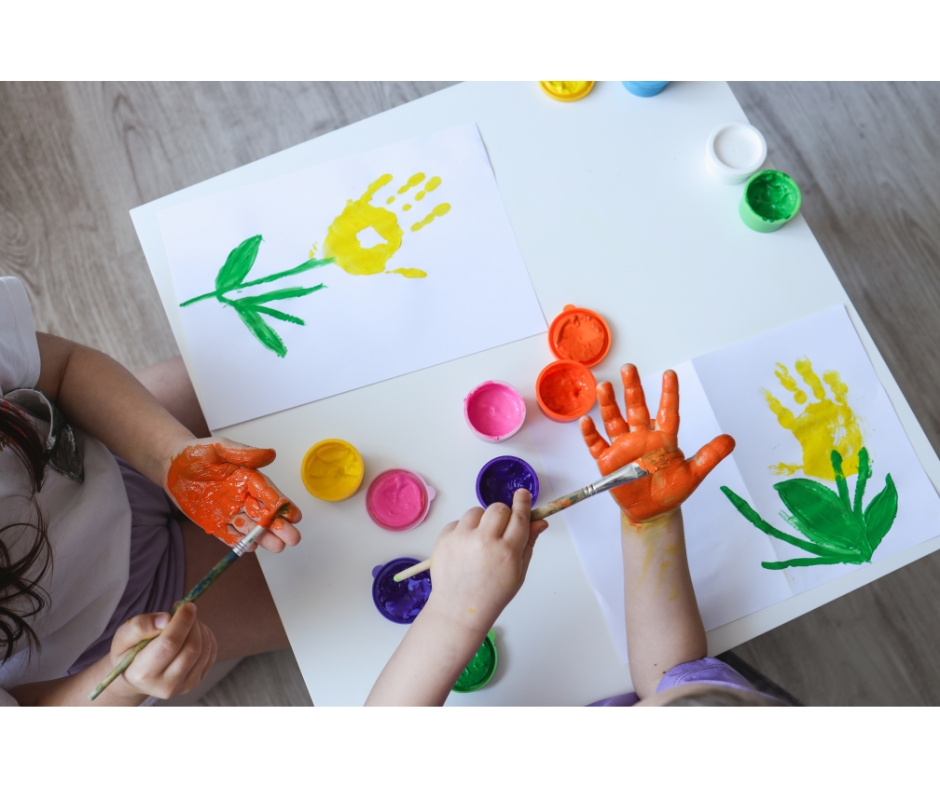
Introduction to Play-Based Learning
Play-based learning gives children opportunities to learn through meaningful, engaging, and purposeful activities. Rather than treating play as a break from education, this approach uses play to support language, problem-solving, creativity, social skills, emotional development, and curiosity.
Play IS learning.
Play builds the brain.
Play develops language, problem-solving, creativity, social skills, and emotional intelligence.
At Global Einstein Institute (GEI), we don’t see play as a break from learning. Instead, purposeful play is a powerful learning tool — especially for young children.
In this blog, we explore why this approach is valuable from the early years through the teenage years. We also explain how GEI integrates purposeful activities into meaningful learning experiences.
What Is Play-Based Learning?
Play-based learning is an educational approach where children develop knowledge and skills through activities that are enjoyable, meaningful, interactive, and appropriate for their stage of development.
Instead of relying only on worksheets, memorisation, or repetitive instruction, children can explore ideas through games, movement, stories, role-play, creative activities, puzzles, building tasks, and hands-on experiences.
Importantly, the educator still has an essential role. Teachers carefully plan activities, introduce new concepts, observe children’s responses, ask questions, and provide guidance when needed.
As a result, children experience a balance between child-led exploration and purposeful teaching.
Supporting Children’s Overall Development Through Play
Meaningful play can support several areas of development at the same time. Moreover, activities can often combine multiple skills within one engaging experience.
Cognitive Development and Problem-Solving
Children naturally experiment, test ideas, solve problems, and make decisions while playing. Consequently, these experiences encourage curiosity and help children understand cause and effect.
For example, puzzles, construction games, sorting activities, matching tasks, and strategy games can encourage children to think logically and develop problem-solving skills.
For more information about developing thinking and learning skills, explore GEI’s Cognitive Development Program.
Language and Communication Through Play
Role-play, storytelling, conversations, and collaborative activities provide natural opportunities for children to practise communication.
Through these experiences, children can learn new vocabulary, express ideas, listen to others, follow instructions, and develop confidence when communicating.
Learn more about this area through GEI’s Language and Communication Development programme.
Building Social Skills
Playing with others gives children opportunities to practise cooperation, turn-taking, sharing, negotiation, and teamwork.
In addition, group activities can help children understand different perspectives and develop positive relationships.
Emotional Growth and Confidence
Play provides a supportive environment where children can express feelings, explore different situations, and practise managing emotions.
For instance, stories and role-play can introduce situations involving friendship, frustration, confidence, problem-solving, and empathy.
Therefore, these experiences can support emotional awareness and resilience.
Creativity and Imagination
Open-ended activities allow children to experiment with ideas and create their own solutions.
Drawing, music, building, storytelling, pretend play, and creative projects can encourage imagination and flexible thinking. Furthermore, children can learn that there may be several ways to approach a problem.
Learning Through Play at Different Stages
Playful learning experiences can be adapted as children grow. Therefore, the activities and level of guidance should change according to the learner’s developmental stage.
Early Years: Ages 3–6
Young children benefit from sensory exploration, movement, stories, music, imaginative activities, simple games, and hands-on experiences.
At this stage, activities can introduce early communication, numeracy, social interaction, attention, and problem-solving skills. In addition, children can gradually develop confidence in exploring their environment.
Primary Years: Ages 7–12
Older children can participate in more structured games, challenges, collaborative projects, experiments, puzzles, and creative tasks.
For example, these activities can connect academic concepts with real-world situations. As a result, children may find it easier to understand and remember new ideas.
Teen Years: Ages 13–16
For teenagers, purposeful activities can include problem-solving challenges, technology-based projects, collaborative tasks, creative expression, simulations, and real-world learning experiences.
Although the activities become more sophisticated, they can still encourage curiosity, independence, active participation, and practical thinking.
GEI’s Approach to Purposeful Play
At Global Einstein Institute (GEI), learning is designed around the individual needs, strengths, and interests of each child.
Our approach combines structured teaching with engaging activities so that children can participate actively in their learning journey.
For example, teachers can use games, movement, storytelling, practical activities, technology, creative expression, and real-world tasks to make concepts easier to understand.
Most importantly, the goal is not simply to keep children entertained. Instead, every activity should have a meaningful learning purpose.
You can also explore GEI’s Interactive Learning in Singapore to understand how active participation can support children’s development.
How Teachers Guide Playful Learning Activities
Purposeful activities can be used to introduce a new topic, reinforce a concept, practise a skill, or help children apply what they have learned.
For example, a mathematics activity may involve counting objects, solving a challenge, building patterns, or using a game to practise calculations.
Similarly, a language activity may involve storytelling, role-play, picture cards, or group discussion.
As a result, children can connect academic concepts with active experiences rather than simply memorising information.
Why Parents Choose GEI
Parents often want their children to develop academic skills while also becoming confident, independent, creative, and socially capable learners.
A purposeful approach can support this wider development by combining learning with meaningful experiences.
At GEI, teachers consider the child’s developmental stage and learning needs when planning activities. This helps create an environment where children can participate, communicate, explore, and build confidence.
In addition, parents can learn more about Global Einstein Institute Singapore and its educational programmes.
How Teachers Facilitate Purposeful Learning</2>
Effective playful learning does not mean that teachers simply allow children to choose any activity without direction.
Instead, teachers observe, guide, question, encourage, and adapt activities according to each child’s needs.
They may:
- Introduce activities that encourage curiosity and exploration.
- Ask questions that encourage children to think about their choices.
- Provide appropriate challenges based on individual ability.
- Encourage children to communicate and collaborate.
- Connect activities to academic and everyday concepts.
- Adjust activities when a child needs additional support.
- Observe progress and use the experience to plan future learning.
Consequently, this combination of guidance and exploration helps children remain actively involved while working towards clear developmental goals.
Developing Future-Ready Skills Through Playful Learning
Education is not only about remembering information. Children also need skills that help them adapt, communicate, solve problems, work with others, and approach new situations with confidence.
Interactive and hands-on experiences can encourage:
- Problem-solving
- Critical thinking
- Communication
- Creativity
- Collaboration
- Decision-making
- Confidence
- Independence
Moreover, these skills can support children both inside and outside the classroom.
Research and guidance from organisations such as UNICEF highlight the importance of early childhood development and learning through responsive, engaging experiences.
Similarly, the National Association for the Education of Young Children (NAEYC) provides guidance on developmentally appropriate practice and learning experiences for young children.
Frequently Asked Questions About Playful Learning
Is This Approach Only Suitable for Young Children?
No. The activities can be adapted for different ages. Young children may benefit from sensory exploration and imaginative activities, while older learners can participate in challenges, projects, simulations, technology-based tasks, and collaborative problem-solving.
Does It Replace Academic Learning?
No. Purposeful activities can complement academic instruction. Teachers can use interactive experiences to introduce, practise, reinforce, or apply academic concepts.
Can It Support Communication Skills?
Yes. Storytelling, role-play, group activities, and conversations can provide opportunities for children to practise vocabulary, listening, speaking, and social communication.
How Does GEI Use Purposeful Activities?
GEI integrates engaging activities into structured learning experiences. Teachers use games, practical tasks, creative activities, technology, movement, and collaborative learning to help children understand and practise different skills.
Can Activities Be Adapted to Individual Needs?
Yes. Activities can be adjusted according to a child’s developmental stage, strengths, interests, learning goals, and areas where additional support may be helpful.
The Value of Purposeful Play
Play-based learning is more than simply giving children time to play. When activities are thoughtfully designed and supported by skilled educators, play can become a meaningful pathway for developing communication, thinking, creativity, social skills, emotional awareness, and confidence.
At Global Einstein Institute, we believe children learn best when they are actively involved, encouraged to explore, and given opportunities to connect learning with real experiences.
Furthermore, by combining purposeful activities with structured teaching, GEI aims to create engaging learning experiences that support each child’s development.
If you would like to learn more about GEI’s programmes or discuss your child’s learning needs, contact Global Einstein Institute.