




Introduction
Some children hear every sound louder, feel every touch more intensely, or become overwhelmed by lights, textures, or movement. Others may seek constant sensory input—jumping, touching, spinning, or making noises to feel regulated. These differences are known as Sensory Processing Challenges, common in children with Autism, ADHD, GDD, anxiety, or Sensory Processing Disorder,
(SPD).
At Global Einstein Institute (GEI), we understand that sensory needs are not “bad behaviour”—they are the brain’s way of trying to feel safe and organised. That’s why we design sensory-friendly environments, personalised strategies, and calming routines to help every child learn and thrive.
Understanding Sensory Processing
Sensory processing is how the brain interprets information from the senses:
- Sight
- Sound
- Touch
- Smell
- Taste
- Movement (vestibular)
- Body awareness (proprioception)
Children may be:
- Sensory avoiders: Easily overwhelmed by noise, touch, crowds, or bright lights.
- Sensory seekers: Crave movement, pressure, sound, or stimulation.
- Mixed: Avoid some inputs, seek others.
There is no “one-size-fits-all.” Every child’s sensory profile is unique.
How Sensory Challenges Show Up in Daily Learning
Children with sensory differences may:
- Cover ears or avoid noisy environments
- Refuse certain clothing or textures
- Struggle to sit still or pay attention
- Chew on objects or fidget constantly
- Have meltdowns in busy or unpredictable situations
- Become tired or shut down after too much input
Parents often say their child learns best when the environment feels calm, predictable, and supportive—exactly what we create at GEI.
GEI’s Approach to Supporting Sensory Needs
1) Sensory-Friendly Classrooms
Our learning spaces are designed intentionally:
- Soft lighting instead of harsh fluorescents
- Organised, clutter-free areas
- Minimal visual distractions
- Calm colour schemes
- Quiet zones for breaks
A peaceful environment reduces stress and improves focus.
2) Sensory Tools & Supports
We provide children with tools that help them regulate:
- Fidget toys
- Weighted lap pads or blankets
- Noise-cancelling headphones
- Chewelry (chewable items)
- Therapy balls or wobble cushions
- Visual timers and schedules
These tools help children stay calm and engaged without punishment or judgment.
3) Movement and Sensory Breaks
Children are not meant to sit still all day—especially sensory seekers!
We include: “Heavy work” activities for deep-pressure input Jumping, stretching, or wall push-ups Mini movement breaks between tasks Outdoor play and gross motor time
Movement helps the brain focus and learn.
4) Collaboration with Occupational Therapists (OTs)
Our OTs assess each child’s sensory profile and recommend strategies that teachers apply in the classroom. Together, we ensure consistency across school, therapy, and home.
5) Visual Structure & Predictable Routines
Uncertainty can trigger sensory overload.
We use:
- Picture schedules
- “First-Then” boards
- Clear transitions
- Advanced warnings before changes
Predictability builds emotional safety.
6) Teaching Children Self-Regulation Skills
We don’t just manage sensory needs—we teach children to understand them: “What does my body need right now?”
 “Do I need a break, deep pressure, or movement?”
This empowers independence.
Integration with GEI’s 10 Domains
Sensory support connects across all GEI domains:
- Sensory Processing Domain: Core support for regulating input
- Motor Skills: Movement, balance, coordination
- Social-Emotional: Managing overwhelm and staying calm
- Communication: Expressing sensory needs
- Adaptive & Daily Living: Tolerating clothing, textures, sounds
- Cognitive: Better focus = better learning
- Interactive Learning: Participating in group activities
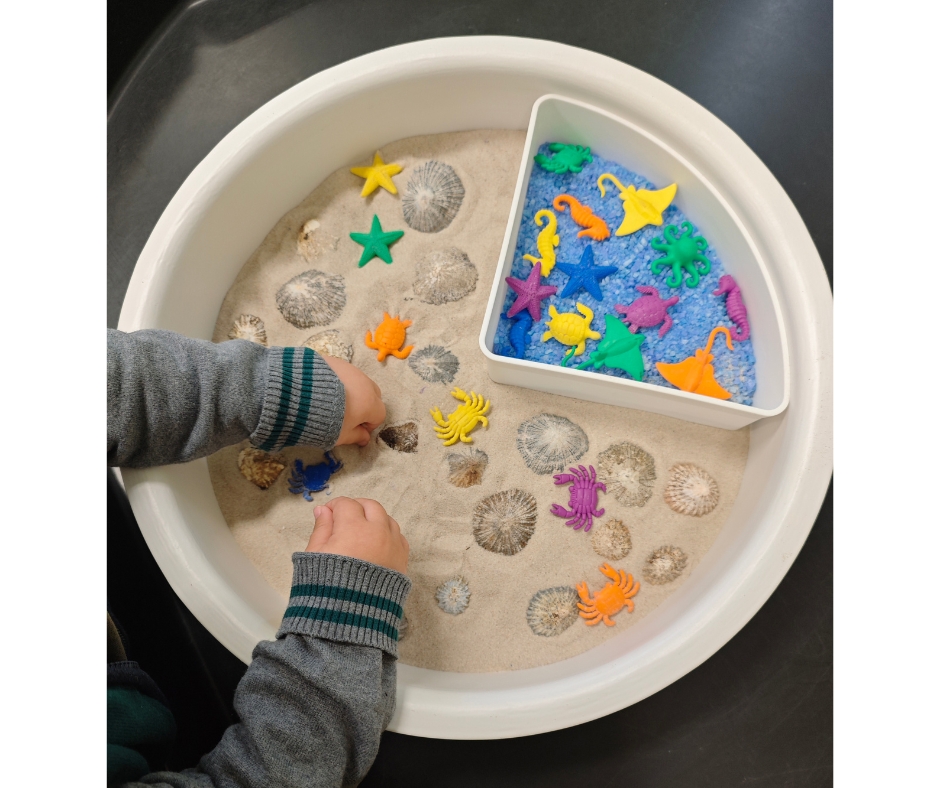
- Play & Exploration: Safe sensory play builds confidence
- Creative Expression: Music, art, and dance provide sensory outlets
- Holistic Development: Supporting the whole child—not just behaviour
Conclusion
Sensory challenges are not misbehaviour—they are signals. When we listen, understand, and respond with the right support, children feel safe, calm, and ready to learn.
At Global Einstein Institute, we create sensory-smart classrooms where every child’s needs are respected and met. Through personalised strategies, therapeutic collaboration, and loving guidance, we turn overwhelm into confidence and chaos into calm.
At GEI, sensory differences are not obstacles—they are opportunities to understand each child more deeply.