


Introduction
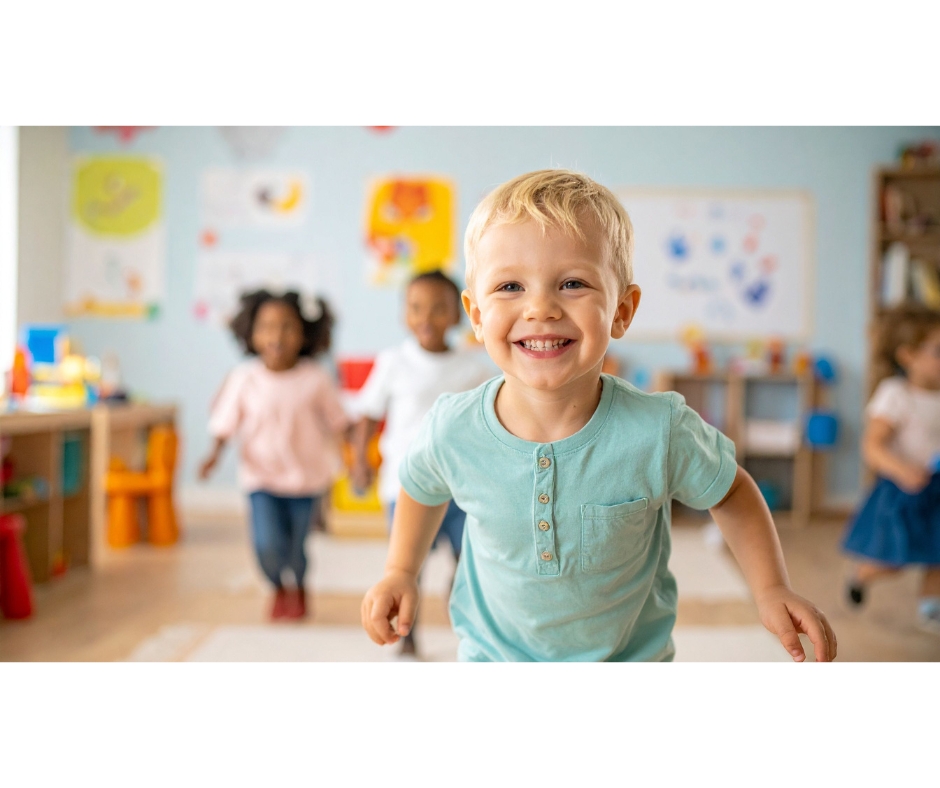
For generations, education was often seen as quiet classrooms, worksheets, and memorization. But children are naturally curious, active learners who understand the world best through exploration and play. Today, research shows that play is not just fun—it is one of the most powerful ways children learn.
At Global Einstein Institute (GEI), we believe learning should spark joy, curiosity, and discovery. That is why we embrace purposeful play-based learning, a structured approach that blends academic goals with hands-on experiences. The result? Children who are more engaged, confident, and ready to think deeply.
What Is Traditional Learning?
Traditional learning often looks like:
- Teacher-centered instruction
- Worksheets and rote memorization
- Sitting for long periods
- One-size-fits-all activities
- Focus on results rather than process
While this approach may build basic knowledge, it often limits creativity, critical thinking, and problem-solving—skills children need in the real world.
What Is Play-Based Learning?
Play-based learning is not “just play”—it is intentional and guided by teachers to achieve learning goals through meaningful experiences. It includes:
- Hands-on exploration
- Role-play and imagination
- Building and creating
- Movement and experimentation
- Inquiry and investigation
Children learn best when they are active, curious, and emotionally connected to what they are doing—play naturally creates that environment.
Why Play-Based Learning Works
Play supports multiple areas of development at the same time:
- Cognitive: Problem-solving, memory, creativity
- Language: Conversations, storytelling, vocabulary
- Social: Sharing, cooperation, conflict resolution
- Emotional: Confidence, self-regulation, resilience
- Physical: Fine and gross motor skills, coordination
Play builds the foundation for deeper academic learning later on.
Play in Daily Learning: Real Examples
At GEI, play is not unstructured chaos—it is carefully designed to teach.
- Pretend restaurant: Children practice reading menus (literacy), counting money (math), and taking turns (social skills).
- Building with blocks: They learn balance and symmetry (STEM), trial and error (critical thinking), and teamwork (communication).
- Outdoor games: Movement strengthens motor skills while following rules builds self-control and patience.
Every playful moment is a learning opportunity.
GEI’s Approach: Purposeful Play with Intention
At GEI, play-based learning is guided, structured, and powerful. Our approach includes:
1. Clear Learning Outcomes
Teachers plan play experiences to meet academic and developmental goals.
2. Teacher as Facilitator, Not Lecturer
Teachers ask open-ended questions like “What do you think will happen if…?” to encourage deeper thinking.
3. Blending Play with Academics
Children learn literacy, math, science, and more through games, experiments, and exploration.
4. Child-Led Inquiry
Children follow their interests, which increases motivation and engagement.
5. Safe Space to Take Risks
Play encourages trial and error without fear—building resilience and creativity.
Traditional Learning vs Play-Based Learning: A Comparison
| Traditional | Play-Based |
|---|---|
| Memorization | Critical thinking |
| Listening | Exploring and questioning |
| Teacher-led | Child-centered with teacher guidance |
| One right answer | Multiple solutions |
| Sitting still | Movement and engagement |
Integration with GEI Domains
Play-based learning aligns naturally with GEI’s 10-domain curriculum:
- Language & Communication: Storytelling, role-play, conversation
- Cognitive Development: Problem-solving and logical thinking
- Social-Emotional Growth: Cooperation and empathy
- Motor Skills: Fine and gross motor play
- Interactive Learning: Team projects and group games
- Aesthetic & Creative Expression: Art, music, dramatic play
Through play, children grow in every domain—academically, socially, emotionally, and physically.
Conclusion
Play is not the opposite of learning—play is the most powerful form of learning. While traditional learning often focuses on memorizing information, play-based learning helps children think, create, solve problems, and build real-world skills that last a lifetime.
At Global Einstein Institute, we choose purposeful play because it develops the whole child—mind, body, and heart. When children are engaged, joyful, and curious, they don’t just learn… they fall in love with learning.
And that is where true education begins.