


Introduction
For many children, learning to read and write feels natural. But for others, the letters dance, the words blur, and spelling seems like a never-ending puzzle. This is the reality of dyslexia, a common learning difference that affects reading, writing, and spelling.
At Global Einstein Institute (GEI), we believe dyslexia does not define a child’s potential—it simply shapes how they learn best. With the right support, children with dyslexia can thrive academically while also discovering and celebrating their unique talents.
Understanding Dyslexia
Dyslexia is a language-based learning difference that may involve:
- Reading challenges: Difficulty decoding words, recognizing familiar words, or reading fluently.
- Spelling and writing difficulties: Struggles with sequencing letters or remembering spelling rules.
- Memory and processing: Trouble remembering instructions or processing information quickly.
It’s important to note that dyslexia has nothing to do with intelligence. Many children with dyslexia excel in creativity, problem-solving, and big-picture thinking.
How Dyslexia Shows Up in Daily Learning
Dyslexia may affect children’s experiences in the classroom and beyond:
- In academics: Difficulty keeping up with reading assignments, spelling tests, or note-taking.
- In communication: Struggles to write ideas clearly even when they can express them verbally.
- In behavior: Frustration, avoidance of reading tasks, or low confidence in academic skills.
- In strengths: Creative thinking, strong imagination, visual-spatial skills, and oral storytelling.
Parents often notice that with the right strategies, children with dyslexia become confident learners who shine in creative and problem-solving areas.
GEI’s Approach to Supporting Dyslexia
At GEI, we support children with dyslexia by focusing on individualized, strength-based learning. Our approach includes:
- Multisensory Teaching
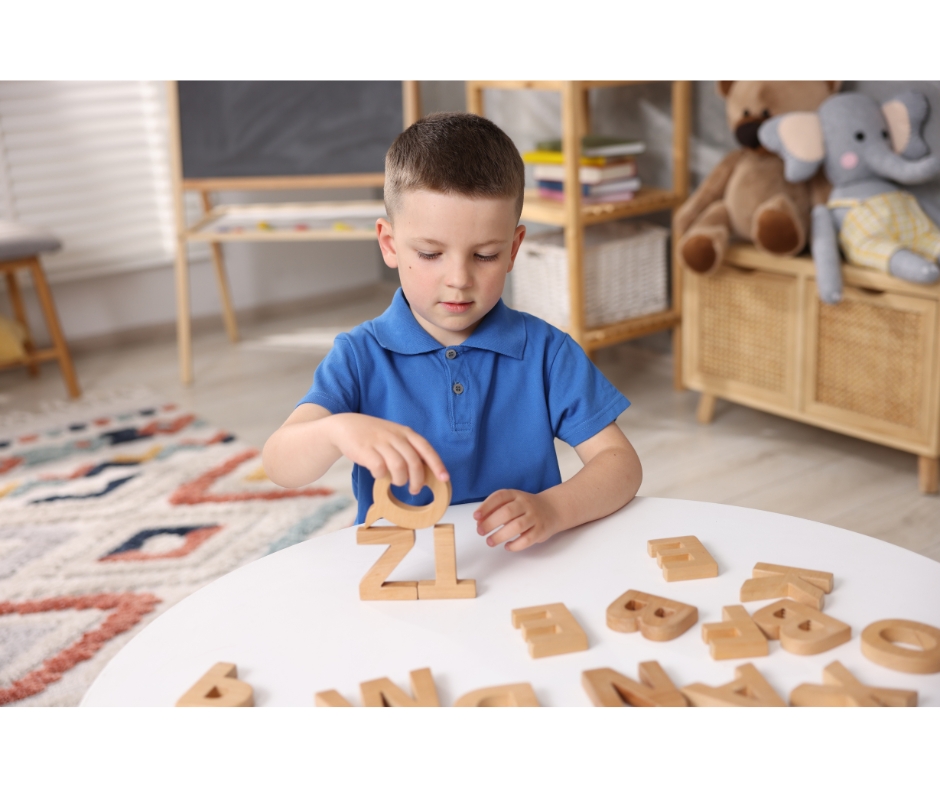
- Children engage multiple senses—seeing, hearing, touching, and moving—when learning letters, sounds, and words.
- For example, tracing letters in sand while saying the sound aloud reinforces memory.
- Assistive Technology & Tools
- We use reading apps, text-to-speech tools, and visual aids to support literacy.
- These tools reduce frustration and build independence.
- Building Confidence & Resilience
- Teachers emphasize effort and progress over perfection.
- Success in oral storytelling, creative projects, or problem-solving is celebrated.
- Collaboration with Therapists
- We work alongside speech and language specialists or literacy tutors to ensure consistent support.
- Integration with GEI Domains
- Dyslexia support is woven into all 10 GEI domains—from communication strategies in Language, to building resilience in Social-Emotional Development, to using creativity as an outlet in Aesthetic & Creative Expression.
- This ensures children thrive beyond just reading and writing.
Conclusion
Dyslexia is not a barrier to success—it is simply a different path to learning. At GEI, we unlock literacy by giving children the tools, strategies, and confidence they need while celebrating their unique strengths.
At Global Einstein Institute, we believe every child deserves to experience the joy of reading, the power of expression, and the pride of achievement. Together, we can help children with dyslexia thrive.