


Introduction
“Stop playing and focus!”
Many of us grew up hearing this — but modern research tells us the opposite.
 Play IS learning. Play builds the brain. Play develops language, problem-solving, creativity, social skills, and emotional intelligence.
At Global Einstein Institute (GEI), we don’t see play as a break from learning.
Play is our most powerful learning tool — especially for young children.
In this blog, we explore why play-based learning is essential from early years all the way into the teenage years, and how GEI integrates purposeful play into everything we do.
What Is Play-Based Learning?
Play-based learning is guided, purposeful play designed to achieve specific learning outcomes.
It combines: Child-led exploration
 Teacher guidance
 Creativity & imagination
 Social interaction
 Hands-on experiences
It is not random free play.
It is structured, meaningful play that builds knowledge and skills naturally.
Why Play-Based Learning Works (Backed by Science)
1. Builds the Brain
Neurological research shows that during play, the brain forms and strengthens neural connections — especially in areas responsible for memory, thinking, and emotional regulation.
2. Improves Language & Communication
Children talk, negotiate, explain, and express ideas during play.
3. Develops Problem-Solving
Play involves experimentation, decision-making, and trying again after failure.
4. Strengthens Social Skills
Children learn sharing, empathy, teamwork, and leadership naturally.
5. Reduces Stress & Increases Motivation
When learning is enjoyable, the brain retains more information.
6. Encourages Creativity & Innovation
Open-ended play boosts imagination — a key skill for future jobs that don’t even exist yet!
How Play-Based Learning Looks at Different Ages
Ages 3–6 (Early Childhood)
Pretend play (doctor, shop, teacher)
Building blocks, puzzles, sensory bins
Singing, dancing, storytelling
Outdoor exploration
Focus: Language, motor skills, imagination, social-emotional growth
Ages 7–12 (Primary / Middle Childhood)
Strategy games
Science experiments
Collaborative projects
Role-play and simulations
Coding games and logic puzzles
Focus: Critical thinking, teamwork, problem-solving, creativity
Ages 13–16 (Teens)
Play changes form, but it still matters!
Design thinking challenges
Entrepreneurship simulations
Debates and gamified learning
Digital media creation
Escape rooms and team challenges
Focus: Independence, leadership, innovation, real-world application
GEI’s Play-Based Approach
At GEI, play is not just for fun — it is intentional, strategic, and connected to outcomes.
We integrate play into our 10 Developmental Domains to create deep learning.
Examples of Play at GEI:
 Dramatic Play → Builds Language & Social Skills
Children act out real-life scenarios to understand roles and emotions.
 Hands-On Games → Builds Math & Logic
We use manipulatives, board games, and puzzles to make abstract ideas concrete.
 Project-Based Play → Builds Critical Thinking
Students work in teams to solve real-world challenges.
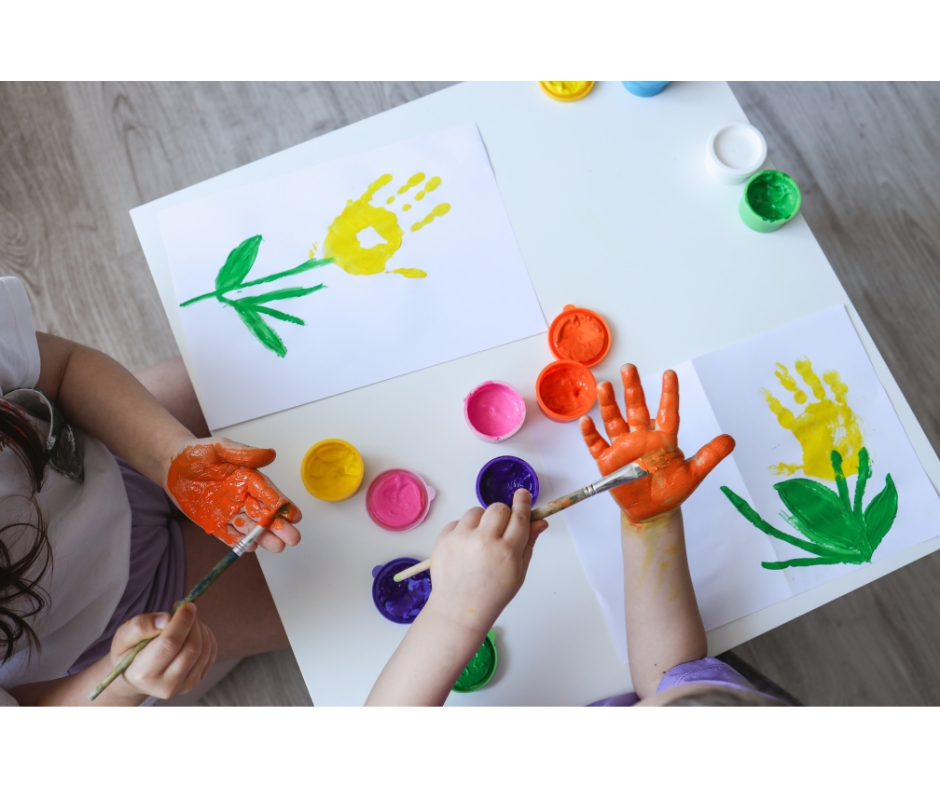
Creative Play → Builds Imagination & Confidence
Art, music, and design help children express themselves.
 Active Play → Builds Motor Skills & Resilience
Movement improves focus, energy, and physical development.
 Digital Play → Builds Tech & Future Skills
Interactive apps and coding games prepare students for modern learning.
Why Parents Love Play-Based Learning at GEI
Children are excited to come to school Less stress, more joy Stronger learning outcomes Better social and emotional development Builds confidence and curiosity Creates lifelong learners
Play does NOT mean “no structure.”
Play means smart structure — where learning feels natural and engaging.
How GEI Teachers Facilitate Play-Based Learning
Our educators are highly trained to turn every play experience into a learning moment.
They: Observe children’s interests Ask guiding questions Introduce new vocabulary Encourage deeper thinking Connect play to real-world concepts Provide tools and resources for exploration
Play-Based Learning = Future-Ready Skills
In the future, employers will value people who can:
Think creatively
Solve complex problems
Communicate effectively
Collaborate with others
Adapt to change
Play builds all of these.
Conclusion
Play-based learning is not just an early childhood trend — it is a scientifically proven, life-changing approach that helps children of all ages grow into confident, creative, capable learners.
At Global Einstein Institute, we don’t choose between play or academics.
We combine them. We make learning joyful.
 We prepare children not just for tests — but for life.
Because when learning feels like play…
Children don’t just learn.
They LOVE to learn.